Finding yourself in need of collision restoration, structural repairs, or major mechanical fixes after a vehicle impact is almost always an overwhelming and frustrating experience. Beyond dealing with the immediate shock of an accident, drivers are suddenly forced to manage complex insurance claims, coordinate temporary transportation, and shoulder the burden of finding a highly qualified, trustworthy facility to bring their vehicle back to life. For most people, an automobile is one of the largest financial investments they will ever make outside of homeownership.
Unfortunately, not every repair facility operates with the same high level of structural precision, technical training, or modern factory equipment. Selecting the wrong location can lead to a domino effect of long-term problems: uneven paint coats that peel within a year, misaligned unibody frames that cause uneven tire wear, compromised electronic safety sensors, and persistent mechanical headaches that never quite go away. Asking the right questions before authorizing any work allows you to separate top-tier collision centers from low-quality quick-fix operations.
1. What Industry Certifications Do Your Technicians Hold?
Modern automobiles are no longer simple mechanical structures assembled from stamped steel sheets. Today’s vehicles are engineered high-tech machines built from complex combinations of ultra-high-strength steel alloys, aluminum paneling, composite plastics, carbon fiber elements, and intricate networks of electronic safety sensors. Repairing a vehicle following even a moderate collision requires far more than basic hammer-and-dolly metalworking; it demands advanced structural engineering knowledge, precise metallurgy understanding, and specialized technical expertise.
When interviewing a prospective body repair shop, your very first step should be evaluating the technical credentials of the staff who will actually be turning wrenches on your vehicle. Look for industry-recognized standard certifications that prove the facility invests in continuous professional education. The most prominent credential to look for is I-CAR (Inter-Industry Conference on Auto Collision Repair) Gold Class recognition. Facilities that earn and maintain Gold Class status require their technicians, estimators, and managers to undergo continuous annual training regarding evolving repair technologies, structural joining techniques, and safety protocols.
Key Certifications and Credentials to Inquire About:
- I-CAR Gold Class Designation: Ensures technicians, estimators, and repair planners complete continuous yearly training on modern collision restoration techniques, structural welding, and advanced safety systems.
- ASE Collision Repair & Refinishing Certification: Validates tested individual competency in structural analysis, sheet metal repair, plastic joining, painting prep, and mechanical component integration.
- Specialized Welding Certifications: Confirms technicians hold certified qualifications in structural aluminum and steel welding, which require vastly different gas mixtures, wire materials, and temperature controls.
2. Do You Have Specific Training for My Vehicle’s Brand?
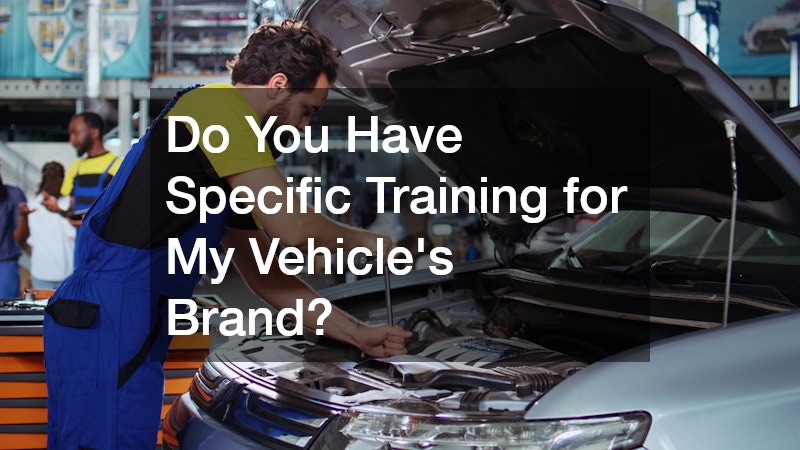
Brand-specific factory training is crucial, particularly if you drive a luxury, high-performance, or precision-engineered Japanese or European vehicle. Modern car manufacturers utilize proprietary designs that require specialized tools, specific diagnostic software, and dedicated repair methodologies that generic facilities often lack.
For example, if your vehicle requires specialized Acura auto repair, you need absolute confirmation that the technicians understand the manufacturer’s proprietary Advanced Compatibility Engineering (ACE) body structure. ACE frame designs utilize specialized crush zones and high-tensile steel intended to redirect collision energy away from the passenger cabin during an impact.
Why Brand-Specific Expertise Matters:
- Manufacturer Repair Guidelines: Ensures technicians follow step-by-step procedures outlined directly by the automaker for your exact model year.
- Specialized Tooling Access: Guarantees the shop has access to brand-specific rivets, panel bonding adhesives, and hydraulic pulls required for structural integrity.
- Preserving Factory Warranties: Helps maintain existing corrosion and structural warranties by using manufacturer-approved repair techniques.
3. What Type of Replacement Parts Will You Be Using?
When a vehicle undergoes collision restoration, damaged components must be unbolted, cut out, or replaced. These components range from outer cosmetic sheet metal—like hoods, fenders, and quarter panels—to internal structural supports, crash bars, and bumper reinforcement beams. The specific category and quality of replacement parts utilized throughout your build will directly dictate your vehicle’s physical fit, surface finish, structural safety performance, and long-term resale value.
During your initial consultation, ask the staff directly about their parts sourcing policies and insist on a detailed breakdown. Original Equipment Manufacturer (OEM) parts are fabricated directly by or for your vehicle’s original manufacturer. They are identical in material gauge, chemical composition, dimensions, and structural tolerances to the parts installed on your vehicle when it originally rolled off the assembly line.
Insurance adjusters frequently pressure facilities to utilize aftermarket, reconditioned, or salvage-yard components to minimize claim payouts. While certain high-quality aftermarket components meet basic structural guidelines, many budget aftermarket body panels suffer from improper mounting hole alignment, thinner steel gauges, inadequate rust-inhibiting coatings, and poor edge stamping.
Sourcing Questions to Ask the Estimator:
- Will my formal written estimate explicitly differentiate between OEM, CAPA-certified aftermarket, reconditioned, and salvage components?
- If aftermarket structural parts must be used, do those parts carry a written fitment, crash-safety, and corrosion warranty from the manufacturer?
- Does the facility advocate for OEM parts directly with insurance adjusters by submitting official manufacturer position statements regarding structural safety?
4. How Do You Handle Automotive Glass and Windshield Services?
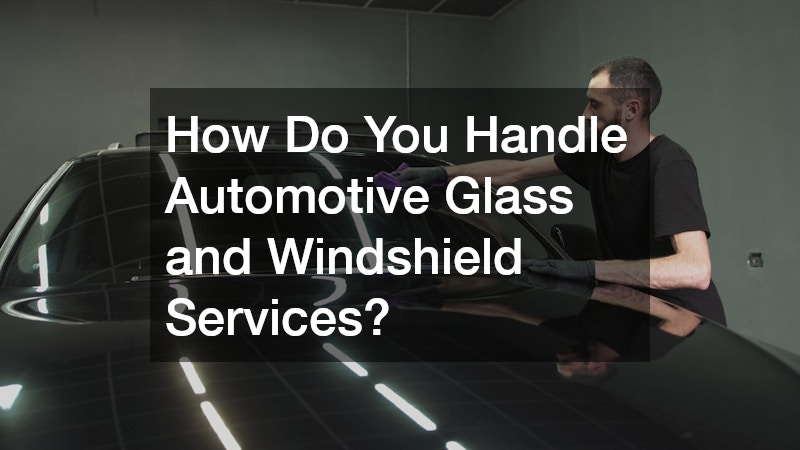
This rigorous commitment to original specification components extends to specialized glass replacement as well. Severe impacts, flying highway debris, or structural body twisting during an accident often cause cracks, star-fractures, or total shattering across front and rear glass surfaces.
If your collision resulted in damaged automotive glass, clarify whether the facility handles the installation in-house or collaborates with a dedicated auto windshield replacement service. High-grade, OEM-spec glass is critical because modern windshields are designed as an essential structural support component of the cabin, providing up to 40% of the roof’s structural integrity during a rollover accident. Furthermore, modern glass houses embedded heating grids, acoustic dampening layers, and optical zones required for forward-facing safety cameras.
What to Confirm Regarding Glass Repairs:
- Structural Urethane Quality: Ensures the shop uses fast-curing, high-modulus automotive adhesives that meet factory crash-retention standards.
- Optical Clarity for Cameras: Guarantees replacement glass has distortion-free optical zones for forward-facing safety sensors.
- Seamless Installation: Prevents future water leaks, wind noise, and interior cabin condensation.
5. How Do You Verify and Correct Structural Frame Misalignments?
Severe collisions rarely limit their damage to superficial cosmetic paint scratches or dented outer sheet metal panels. The kinetic forces generated during an impact travel deep into the vehicle’s underlying unibody chassis, steering linkages, and suspension subframes. Consequently, mechanical components and structural geometries are frequently knocked completely out of specification, even if the exterior body panels look relatively intact after a quick wash.
Precision chassis and wheel alignment is an absolute necessity after any moderate or severe impact. If your vehicle’s unibody frame or structural rails are misaligned by even a fraction of a millimeter, the vehicle will suffer from chronic handling problems, severe tire tread wear, unstable high-speed tracking, and compromised energy absorption during future impacts. Explicitly ask the shop whether they utilize modern, computerized three-dimensional laser frame measuring systems.
Critical Frame & Geometry Checks to Verify:
- Computerized 3D Laser Frame Measuring: Scans the vehicle’s unibody structure at multiple reference points to verify chassis dimensions match factory blueprint standards precisely.
- Comprehensive Suspension Geometry Checks: Inspects control arms, tie rods, struts, and subframes for microscopic bends or stress fractures that cause vehicle pulling and premature tire wear.
- Four-Wheel Laser Tracking: Ensures all four wheels are parallel and tracking straight along the vehicle’s geometric centerline.
6. How Are Modern ADAS Safety Sensors Recalibrated After Repairs?
In tandem with physical frame straightening, modern vehicles require extensive electronic recalibration following collision work. Today’s automobiles are equipped with complex Advanced Driver Assistance Systems (ADAS), which include features like adaptive cruise control, automatic emergency braking, lane-keeping assistance, pedestrian detection, and blind-spot monitoring.
If a facility completes a minor windshield repair or replaces a front bumper cover without performing precise electronic camera and sensor recalibration, these vital safety systems will miscalculate distances and object trajectory. A camera that is misaligned by a single degree can miss an obstacle on the road by several feet, rendering your vehicle’s emergency braking system completely useless or causing phantom braking events on the highway.
ADAS Recalibration Protocols to Ask About:
- Static Target Recalibration: Uses physical target boards set at precise distances and heights in a controlled, level shop environment.
- Dynamic Drive Recalibration: Involves driving the vehicle on open roads at specific speeds under set weather conditions to let the onboard system auto-calibrate.
- Diagnostic Scan Reports: Requires pre-repair and post-repair computer printouts showing zero fault codes across all safety modules.
7. Do You Have Certified Mechanics on Staff for Mechanical Repairs?
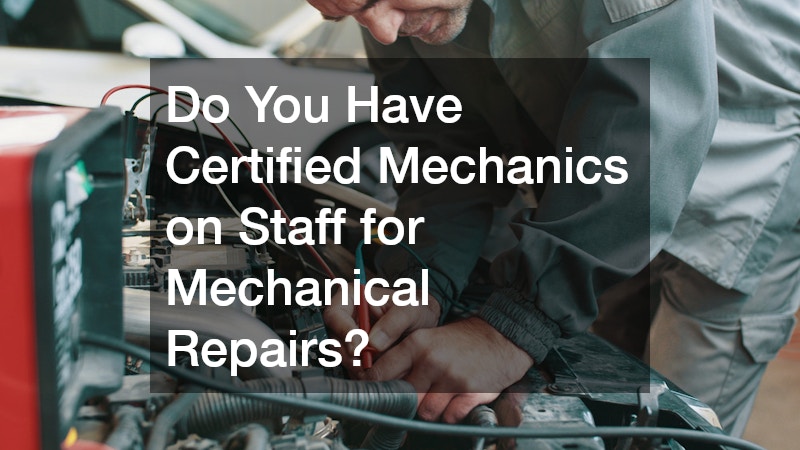
Collision damage rarely respects the boundary between cosmetic bodywork and complex mechanical engineering. When a vehicle suffers a front-end impact, the force hits outer grilles and bumpers first, but quickly propagates inward to crush radiators, bend air conditioning condensers, sever wiring harnesses, shatter intake manifolds, and strain internal engine mounts.
Inquire whether the facility employs experienced, full-time car mechanics capable of performing comprehensive diagnostic scans, engine repairs, and mechanical teardowns directly on site. Having dedicated mechanical technicians under the same roof ensures that deep-seated mechanical issues are identified during the initial teardown phase, rather than discovered at the end of the process when you are scheduled to pick up the keys.
Benefits of In-House Mechanical Expertise:
- Integrated Teardown Inspections: Body technicians and certified mechanics evaluate the damaged vehicle simultaneously, uncovering hidden mechanical, electrical, and suspension damage on day one.
- Faster Turnaround Times: Eliminates downtime associated with loading the vehicle onto flatbeds to transport it across town to third-party mechanical shops.
- Unified Quality Control: A single shop supervisor oversees the entire restoration process from mechanical rebuild to final paint polishing, ensuring consistent accountability.
8. Can You Complete In-House Climate and AC Repairs?
In-house mechanical expertise is especially vital when dealing with complex climate control, cooling, and electrical networks. Front-end impacts almost universally damage the vehicle’s refrigerant lines, cooling fans, and aluminum condensers, requiring comprehensive car AC repair alongside front-end bodywork.
Servicing modern climate control systems requires specialized refrigerant recovery machines, pressure leak testing equipment, and exact factory fluid recharging protocols to prevent compressor failure and environmental contamination.
Key Climate Control Services to Inquire About:
- Refrigerant Recovery and Evacuation: Safely evacuating damaged systems according to environmental standards before structural repairs begin.
- Pressure and Leak Testing: Checking for microscopic hairline leaks in replacement condensers, evaporators, and climate lines using diagnostic dyes.
- Factory Recharging: Refilling the system with the exact type and volume of refrigerant mandated by the vehicle manufacturer.
9. Do You Assist With Vehicle Transport and Towing Services?

In addition to technical credentials, evaluate the practical, stress-reducing convenience services provided by the facility. A major vehicle accident often leaves your car completely undrivable or unsafe to operate on public roads due to broken lights, dragging bumpers, leaking fluids, or deployed airbags.
Ask if the facility coordinates professional towing services to haul your vehicle safely from the accident scene, highway shoulder, or impound yard directly to their secure facility. A shop that coordinates vehicle transport, works directly with insurance adjusters on supplemental estimates, and offers rental car drop-off and pick-up services makes an inherently stressful situation infinitely easier to manage.
Transport and Storage Factors to Confirm:
- Flatbed Towing Availability: Ensures your vehicle’s drivetrain and AWD systems are protected from damage during transit.
- Secure Storage Yards: Confirms your vehicle is stored in a gated, monitored lot while waiting for insurance adjusters to inspect the damage.
- Direct Insurance Coordination: Streamlines towing bill payments directly through your insurance claim policy.
10. What Warranties Do You Provide, and Do You Offer Customization Work?
A truly professional repair facility stands behind its craftsmanship without hesitation. Before you sign any binding work authorizations or hand over insurance claim checks, obtain written clarification regarding the specific warranties offered on labor, structural repair work, and paint finishes.
Furthermore, many automobile owners choose to look at collision restoration as a unique opportunity to upgrade, refresh, or personalize their vehicle’s appearance. If you are interested in custom visual upgrades—such as specialized paint finishes, aftermarket body kits, custom grilles, carbon fiber accents, or tinted lighting assemblies—ask if the facility offers professional auto customization alongside standard insurance repair work. Combining personalized cosmetic upgrades with necessary insurance collision repairs allows you to save significant labor costs and downtime by having all bodywork completed simultaneously.
Protections and Upgrade Services to Check:
- Written Lifetime Warranty: Ensures paint peeling, clearcoat fading, body filler cracking, and panel misalignments will be corrected free of charge for as long as you own the vehicle.
- Insurance Claim Management: Confirms the shop will handle supplemental repair paperwork, photo documentation, and direct negotiations with insurance claims adjusters on your behalf.
- Custom Styling Upgrades: Allows drivers to install custom body panels, specialized paint colors, or aesthetic trim upgrades while the vehicle is already disassembled for repairs.
Before making your ultimate choice, take a few minutes to inspect the facility’s customer service area, speak directly with the shop manager, and observe the overall cleanliness and organization of their workspace. Reliable, consumer-focused auto repair shops will always be completely transparent about their repair methodologies, eager to show you their diagnostic and frame-measuring equipment, and happy to walk you through every step of their detailed estimate. Taking the extra time upfront to ask these essential questions ensures that your vehicle will be returned to you looking pristine, operating reliably, and keeping you and your family safe on the road for years to come.